Review Packet Ancient River Civilizations End of the Course Review
Aboriginal Civilizations
Grade Features
Course Duration: Full Yr
Course Instructor: Susanne Mitko
Assessment: Pre-Test, Lesson Practice, Unit of measurement Exams, Mid-Term Exam, Terminal Exam
Language: English
Class Details
Course Overview
The Acellus Ancient Civilizations course leads students on a journey through the ancient world, giving them a basic agreement of the field of geography too as the beginnings of civilization as we know it. Ms. Mitko imparts to students a contagious excitement virtually history, about what life was like for those who preceded usa, about the contributions our forefathers made to the earth, and about how those contributions have impacted life in the present day.
Form topics include:
- Basic Principles of Geography
- The Neolithic Age
- Mesopotamia
- Egypt's Quondam, Middle, and New Kingdoms
- Christianity, Judaism, and Islam
- Africa
- The Asian Sub-Continent, the Indus River Valley, Hinduism, and Buddhism
- China and its Dynasties
- Japan, Hellenic republic, and Myths
- Alexandria
- The Rise and Autumn of the Roman Empire
- The New Globe - Olmecs, Mayans, and Incas
- Europe, Feudalism, the Middle Ages, and the Renaissance
Acellus Ancient Civilizations is taught past Acellus Teacher Susanne Mitko.
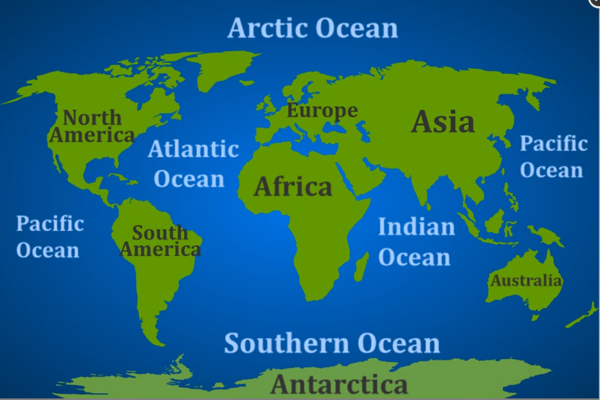
Sample Lesson - Continents and Oceans
;
 This grade was developed by the International Academy of Science. Learn More
Scope and Sequence
Unit 1 To begin their study of ancient civilizations, students develop an agreement of the world we live in. They study the continents and oceans, latitude, longitude, and global address, hemispheres, climate zones, and parts of a map. They explore three types of maps - physical, political, and thematic - and the five themes of geography. Unit 2 Students next investigate archeology. They gain agreement of primary and secondary sources. They discuss theories of the origins of the species, and brainstorm to explore the Paleolithic or Old Rock Age, followed by the transition to the Neolithic Age, how the climate inverse, and what it was like to alive during the Neolithic Age. They meet Oetzi, the iceman of the Alps. Unit 3 In this unit, students take a wait at how time is documented, at how to read a timeline, and at how we refer to unlike periods of fourth dimension. They hash out the characteristics of a civilization. They investigate a political map of the Centre East. They report the geography of Mesopotamia. They consider the benefits of flooding. They examine Cueniform - the showtime system of writing. They explore government and polytheism. They larn about Hammurabi'south code of law and about the contributions made by Mesopotamia to the globe. Unit of measurement four With a focus on Egypt, students study its geography, its hieroglyphics, its social pyramid, and its religious practices. They explore the Old Kingdom and the pyramids, the Middle Kingdom, and the New Kingdom, which was begun past Ahmose. They farther investigate the lives of Hatshepsut and Akthenaton, Rex Tut, and Ramses II. They discuss trade in the Eastern Mediterranean. They examine the Kush Civilization and Egypt. Unit v Students explore the religions of the Aboriginal globe, start with monotheism and its touch on, Abraham and the Covenant God made with him, and the Exodus of the Jewish people from Arab republic of egypt. They study the Jewish kings, the Roman diaspora, what happened after the Roman diaspora, the basic beliefs of Judaism, and what Judaism is like today. They probe the Christian scriptures and investigate the birth of Jesus, his parables, his teachings, and his death. They examine the basic beliefs of Christianity, what Christianity is similar today, the early Christian Church building, and the persecution and the legalization of Christianity past Rome. Side by side they take a await at Islam and Judaism. They larn about the way of life in Arabia. They hash out the prophet Muhammad, his visit with the Affections Gabriel, and the way he gained followers. They explore the five pillars of Islam, and what Islam is like today. They compare and contrast Judaism, Christianity, and Islam. Unit 6 Continuing their written report of ancient religions, students discuss the expansion of Muslim rule. They explore the rise and fall of the Umayyad, Umayyad'due south secure control, and the Islamic Golden Historic period of the Abbasid. Unit 7 Students side by side shift their focus to Africa and study its geography, its vegetation, and its religious practices. They examine the role of oral tradition. They discuss family unit, labor, commerce, and slaves. They explore the Westward African empires, the trans-Sahara journey, supply and need, and the gold and common salt merchandise. They learn about the Niger River and the spread of Islam, Mansa Musa and the Mali Empire, and the Arabic Language and culture in West Africa. Unit 8 In this unit students turn to the Asian sub-continent and explore a political map of this region, the geography of India, its monsoons, and the Indus River Valley civilisation. They study Hinduism, including Brahman and multiple gods, dharma and caste, karma, samsar, and moksha. They investigate the untouchables and civil rights, and what Hinduism is similar today. Turning to Buddhism, they examine Siddhartha Gautama'due south life, the Four Noble Truths, the Eightfold Path, the educational activity of the Buddha, and what Buddhism is like today. Post-obit this unit of measurement students are presented with the Mid-Term Review and Exam. Unit ix People's republic of china is the focus of this unit, where students brainstorm by studying a political map of Asia, Chinese isolation, and civilization on the Huang He. They explore the Shang Dynasty and antecedent worship, the Mandate of Heaven and the Zhou Dynasty, the warring states, and the birth of philosophies. They discuss Daoism, legalism, and Confucianism, and look at the Qin Dynasty and the army of terra cotta warriors. They investigate the Neat Wall of China, the Han Dynasty, and the use of exams to select leaders in government and the military. They too consider how the establishment of the Silk Road initiated global trade, global advice, and the global spread of disease. Unit ten Turning next to Japan, students written report its geography, followed by the period from early Japan to Fujiwara. They explore Chinese and Korean influence on Japan and how Buddhism was implemented in that location. They investigate Japanese art and theater. They consider Japanese literature, specifically looking at the Tale of the Genji. They examine feudal Japan, the decline of bullwork, and Japanese isolation. Unit of measurement xi Students begin their study of Hellenic republic by delving into how the Greeks used myths to explicate the unexplainable, how myths contain seeds of truth from history, how they are used to teach behaviors, and what myths are like in today's world. Students explore Greek geography, the influence of the Phoenicians on Greece, and the influence of geography in trade. They investigate pre-classical Greece, including the Minoans and the Myceneans. They discuss the Nighttime Ages. They acquire about the three types of government that the Greeks went through as they evolved their government to the autonomous system. They consider democracies versus republics, Athenian commonwealth, and how the republic in ancient Athens compares with the democracy in the nowadays-day Us. Unit 12 Continuing their focus on Greece, students examine Hoplites, Athens, and Sparta. They study the Western farsi War. They explore the golden age of Athens. They investigate the Delian League versus the Aegean League in the Peloponnesian War. They examine the life of Alexander the Great. They scrutinize the Hellenistic Age and the contributions that the Greeks made to the world. They get to know the Greeks who built and lived in Alexandria, as well equally the Greeks who became the commencement historians. Unit 13 Students next investigate the Roman Empire, beginning with the geography of Rome. They wait at how the Greeks and the Etruscans influenced early Rome. They consider some of the early on influential Romans. They written report Cincinnatus. They scrutinize the Roman Commonwealth, including its Tripartite system, minority rights and the dominion of police force, and the Punic wars. They explore the rise and fall of Julius Caesar. They analyze the weakening of the Democracy, and the rise and fall of the Roman Empire. Unit of measurement xiv Going on with their study of Rome, students investigate Augustus Caesar, Rome'south first emperor. They probe what life was similar in Rome, including Pax Romana, roads, and communication, also as Roman citizenship, and going to school in ancient Rome. They consider Roman compages, Roman engineering and fine art. They explore Christianity in Rome. They side by side learn about the partitioning of the Empire and the plummet of Rome. They discuss the achievements of Aboriginal Rome. They scrutinize the Byzantine Empire and whether information technology was actually Roman. They survey the reign of Justinian and Theodora. They examine the East-West Schism. Unit xv Students plough adjacent to the New World. They look at its isolation and at the Olmecs. They investigate Mayans and their geography, their cities, warfare, and advancement. They examine the Aztecs and Incas and their geography. They study the cliff dwellers, the mound builders, and the devastation of American Empires. Unit 16 Ancient Europe is the final area students examine in this form. They review a political map of Europe and its geography. They explore the collapse of Rome and the development of feudal Europe. They acquire well-nigh the feudal social pyramid. They study the role of the Catholic Church and the crusades. They investigate the Magna Carta which limited the power of the King. They consider the Black Death and its result on Europe. They discuss the stop of the Center Ages. They examine how culture was reborn through the Renaissance. They contemplate how Martin Luther led the Protestant Reformation. Following this unit, students are presented with the Last Review and Exam.
This course does non have any sections.
More Courses by this Instructor
Source: https://www.science.edu/acellus/course/ancient-civilizations/
0 Response to "Review Packet Ancient River Civilizations End of the Course Review"
Enviar um comentário